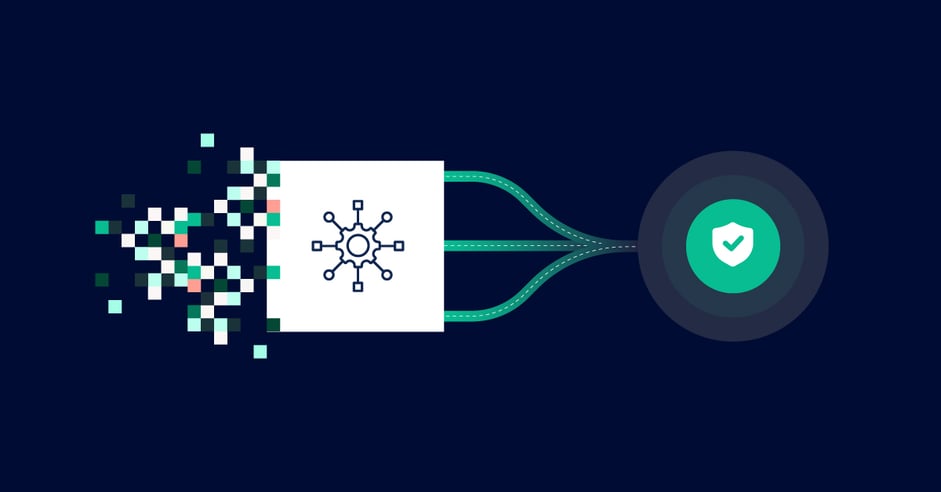
Most enterprises have spent the last decade getting their data in order by building clean data lakes, governed pipelines, and unified dashboards. And yet, when they try to deploy AI agents with their clean and smart data, the whole thing quietly collapses like a pack of cards.
Now, here is a scenario. Let’s consider a global logistics company that runs a pilot with an AI agent to manage supplier communications. The agent is well-configured and connected to a solid data warehouse. The agent runs perfectly in the sandbox, however, the moment it goes live, it starts sending conflicting order updates. The reason is, there are three different systems. Each hold a slightly different version of the current inventory, but the agent has no way to differentiate between them, so it picks one. Sometimes it picks right. But often it does not.
The problem was never the AI. Data architects never built the original systems for a world where machines make decisions. This central challenge defines the agentic AI era. Understanding it separates enterprises that scale intelligent automation from those that remain stuck in a loop of endless pilots. The key is smart Data Engineering solutions.
McKinsey recently reported that nearly two-thirds of global enterprises experiment with AI agents. Fewer than 10 percent scale them to deliver tangible value. Eight in ten companies cite data limitations as the primary roadblock. These companies find that the gap exists in the foundations rather than the models.
The gap between storing data and making it actionable
For two decades, enterprise data strategy prioritized storage, structure, and access. Teams built lakes, defined schemas, and optimized dashboards. This model relied on a human in the loop to reconcile incomplete or conflicting data. A CFO can mentally adjust differing revenue numbers, and a manager can call a supplier to clarify inconsistent lead times.
Autonomous AI agents lack this instinct. They cannot pick up a phone or pause to sense check. They act on received data at machine speed across simultaneous workflows. This shift transforms data quality from a reporting issue into an operational risk. It requires a clear distinction between data that informs a person and data that a machine can act upon autonomously.
Enterprises now face a massive architectural shift. They must move from data management, where systems store and present, to data intelligence, where systems understand and act. Most technology leaders underestimate the significant gap between these two states.
Why agentic AI exposes what analytics never did
A business intelligence dashboard pulls from inconsistent data sources and presents a number. A human analyst investigates discrepancies, which contains the risk. In contrast, an AI agent pulls from those same sources and immediately places orders. By the time someone notices an error, the agent has issued dozens of purchase orders and committed to impossible delivery windows.
Traditional architecture for analytics fails agents because these failures differ categorically. Single agents make inconsistent decisions using fragmented data, while multi agent systems propagate errors across connected workflows.
Both failures occur at machine speed without human visibility. These represent trust architecture problems rather than traditional data quality issues.
The 7 foundations of trustworthy data intelligence
McKinsey research identifies architectural principles that separate successful agent deployments from perpetual pilots. These engineering choices determine whether an agent earns enough trust to act. Organizations must translate these principles into specific technology choices like knowledge graphs and data mesh designs.
- Share meaning instead of raw data
Every data asset must carry common definitions so that all agents interpret fields identically. A customer record must mean the same thing to a billing agent and a support agent.
- Use one data foundation for everything
Build data once for reports, machine learning, and agentic workflows. Redundant pipelines create the most inconsistency in enterprise environments.
- Build trust into the platform by default
Embed security, privacy guardrails, and governance automatically. Agents cannot pause for human approval of every access request.
- Provide stable interfaces for reliable building
Teams need clear, versioned APIs to ensure that agent capabilities compound rather than require constant rework due to shifting data contracts.
- Make behavior visible and measurable
Continuous tracking of quality, performance, and cost prevents cascading failures. Weekly dashboard reviews catch errors too slowly for agentic systems.
- Use controlled execution environments
A shared orchestration layer must coordinate all agents and enforce enterprise rules. Without this, agent sprawl produces operational chaos and conflicting logic.
- Prioritize semantic context over raw data
High value data for agents depends on business context rather than format. Data must carry enough meaning for an agent to act reliably regardless of whether it is structured or unstructured.
The real cost of getting this wrong
Many leaders view data architecture as a technical concern for engineers, but its shortfall in the agentic era creates strategic business risks. Companies now deploy agents for revenue generating functions like supply chain orchestration and financial compliance. An agent using inconsistent data produces a flawed report and even makes flawed business decisions at scale.
More than two-thirds of companies struggle with data silos, and many manage over 1,000 distinct sources. Without semantic grounding, agents cannot understand the business meaning of the data they consume. Data intelligence differs from data management because it provides context. It tells an agent what a number means, what it authorizes, and when to trigger a human review.
Effective enterprise data services now focus on this exact transition. Success requires a shift toward governance by design, real time quality management, and AI ready data pipelines. These foundations support both traditional reporting and autonomous decision making from a single, unified source.
What the transition looks like
Enterprises can complete this transition without ripping out existing infrastructure. Legacy architectures hold decades of business rules, data models, and domain expertise. Agentic AI amplifies this institutional knowledge through interoperability layers. Modern data engineering eliminates the inconsistencies agents cannot tolerate by unifying real time ingestion and batch stream processing.
Identify high value workflows like customer service resolution or supply chain forecasting to begin. Determine the specific data an agent needs to act reliably and locate a single, governed source for that information. This process reveals the gaps organizations must address before they can trust agent deployments.
Two agentic archetypes currently emerge:
- Single agent workflows where one agent uses multiple tools sequentially.
- Multi agent workflows where specialized agents collaborate through shared knowledge graphs.
Both archetypes require consistent data with clear semantic definitions. Without this foundation, single agents make inconsistent decisions while multi agent systems propagate errors enterprise wide. Clear sources of truth for assets, logs, and metrics allow the agent to act without ambiguity.
The governance imperative
Governance must move beyond periodic compliance. Continuous agents require real time, data driven governance embedded directly into the architecture. This practice demands three specific elements:
- Automated lineage tracking to trace every agent decision back to its source data.
- Dynamic access controls that update instantly as business context changes.
- Human accountability integrated into the system design from the start.
Effective governance provides the structural confidence for agents to run at full speed.
The competitive divide
McKinsey research shows that companies successfully scaling agentic AI create a durable competitive advantage. Each deployment strengthens the data foundation and lowers the cost of future projects. This advantage only applies for organizations that shift from data management to data intelligence.
A well governed data lake no longer provides a sufficient foundation for autonomous AI. Technology leaders need to choose to make this shift now proactively or reactively after an expensive failure. Trustworthy agents require better architectures rather than better models. This work starts today.
Ready to relook at your data intelligence and data management strategy to build smarter and more reliable agents?
Book a demo