In the enterprise landscape of 2026, being ‘data-driven’ has moved from a competitive edge to a baseline survival requirement. The real imperative today is Decision Velocity, the speed at which your organization can ingest data, turn it into a meaningful insight, and pull the trigger on a high-stakes business move.
For the CEO, CTO, and CXO, today, the question isn’t ‘do we have enough data?’, it’s ‘how are we transforming that data into a high-frequency weapon for insights and growth’. While Generative AI and Large Language Models (LLMs) grab the headlines, the silent architects behind market dominance are the data engineers.
When your data is fragmented, stale, or lacks integrity, your AI-driven insights become little more than expensive hallucinations built on a shaky foundation.
This blog explores how robust data engineering turns raw information into ‘Alpha’, the ability to out-decide and out-manoeuvre the competition.
From passive data pipelines to autonomous decision platforms
In the past, data engineering was a back-office function, just moving data from Point A to Point B. Today, leaders like Amazon and Netflix have proven that data infrastructure is a productive asset.
We are seeing a massive shift towards autonomous data platforms. In a legacy setup, a broken pipeline meant a 24-hour delay in your reports. In a modern, event-driven architecture, data is a continuous stream of insights. Take Amazon’s dynamic pricing, it synchronizes millions of price points daily by processing a relentless flow of competitor shifts and supply chain fluctuations in real-time. You can’t reach that level of precision without an engineering foundation that treats data as a live, self-governing system.
The new frontier of Generative AI : Context Engineering and RAG
For the C-suite, 2026 is the year of Operational AI. The experimentation phase is over, and the focus is particularly on ROI. Here’s the catch, an LLM is only as smart as the proprietary context it can access. This is why Retrieval-Augmented Generation (RAG) has gone from a technical niche to become the enterprise default.
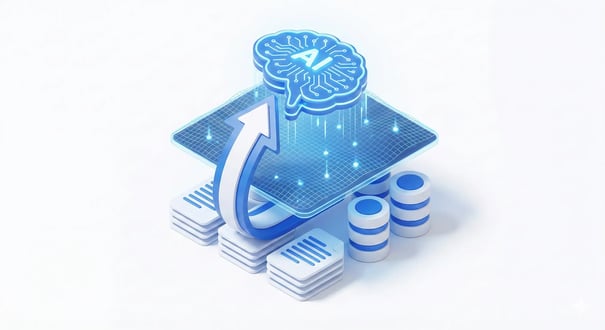
Data Engineering has evolved into ‘Context Engineering’. This is the art of taking your company’s unique insights, such as, legal contracts, customer transcripts, and R&D notes and structuring it into relevant databases.
- The Proprietary channel: Your competitive advantage lies in the unique data you feed to your model.
- The accuracy mandate: By engineering the right context, you kill the risk of hallucinations. Your AI starts giving answers rooted in your policies and your history, not generic internet data.
Structural Agility in your Data patterns
One of the biggest shifts in the CTO’s office is moving away from rigid ETL (Extract, Transform, Load) processes. In the old world, you had to know exactly what question you wanted to ask before you processed the data. In 2026, the market moves way too fast for that.
Modern organizations have embraced ELT (Extract-Load-Transform). By loading raw data directly into environments like a Data Lakehouse and transforming it on-demand, you give your organization options that add value.
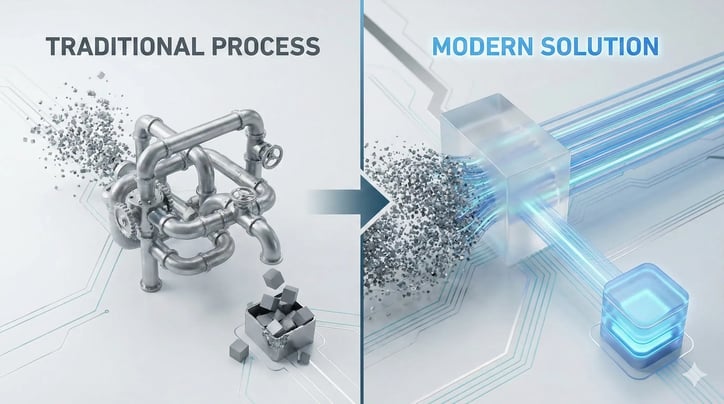
- Flexibility: As business questions change, you re-transform raw data without re-ingesting it.
- Scale: You separate storage and compute, meaning you only pay for the heavy lifting when you are generating insights.
To keep this from turning into chaos, leaders are adopting Data Contracts, which are formal, programmable agreements between the people producing data and the people consuming it. It brings Software Engineering rigor to the data world, ensuring that a minor app update doesn't accidentally jeopardise your executive dashboard.
Delivering Data Storytelling with Lakehouse Architecture
CEOs are tired of beautiful dashboards that don't drive a clear "Yes" or "No" decision. The missing link?
Data Storytelling.
Data Engineering provides the ‘grammar’ for this story through architectures. By organizing data into Bronze (Raw), Silver (Cleaned), and Gold (Business-Ready) layers, engineers ensure the C-suite is always looking at the ‘Gold’ standard.
- Data Lakes: The ‘wide-angle’ view for deep-dive exploration.
- Data Warehouses: Enables high-speed financial reporting and regulated KPIs.
The Data Lakehouse integrates both, serving as the gold standard for speed and precision.
The Speed of Intelligence
Wait-time is the enemy of profit. Uber’s ability to match riders with drivers in seconds isn't luck, it’s Real-Time Data Processing. This relies on Event-Driven Architectures using message queues and stream processing.
For a CXO, this means moving from "What happened last month?" to "What is happening right now, and how do we react?" Whether it’s catching fraud in milliseconds or rerouting logistics based on live traffic, real-time engineering turns info into an immediate tactical response.
Data FinOps: Balancing Sustainable Innovation with Cost Efficiency
In 2026, ‘growth at all costs has been replaced by efficiency-driven innovation. Every query has a carbon footprint and a price tag.
Data Engineering is now tied directly to FinOps. Intelligent tools now ‘right-size’ your computing resources automatically, making sure your AI ambitions don't outrun your budget. By optimizing storage and cleaning up dark data, engineering teams are now directly impacting the company’s bottom line.
What is data mesh?
As Airbnb has shown, a data-informed culture only works when data is democratized. We are seeing a shift from centralized gatekeepers to a data mesh model. Here, business units (like Marketing or Supply Chain) own their data products, while the central engineering team provides the platform and the guardrails. This kills the bottlenecks and lets the people closest to the problems solve them.
Architecting a Future-Proof Data Foundation
In the control room of the modern enterprise, you have two choices: react to the past, or architect the future. A robust data engineering foundation is the infrastructure that turns raw information into a strategic advantage.
It’s the difference between an organization buried under its own data and one that uses its data to bury the competition. The question for 2026 is simple, ‘Is your infrastructure built to store history, or is it built to move the needle?’
Partnering for the future to make these calls, you need a partner who understands both the grammar of engineering and the rhetoric’ of business. At Covasant, we specialize in making the control room dynamics of global leaders accessible to your enterprise.
Ready to Build Your Decision Engine?
At Covasant, we make the data infrastructure of global leaders accessible to your enterprise.