Clinical trial delays cost $600,000 a day.
Most of them are predictable.

Site underperformance, enrollment shortfalls, and protocol deviations follow patterns that appear in your trial data weeks before they become events. TrialOpsIQ applies agentic AI to clinical trial operations, surfacing those patterns early, routing the right intervention to the right person, and helping your trial team stay ahead of the timeline rather than reacting to it.


app.covasant.ai / trialopsiq
TrialOpsIQ // Live Active
47
Active Sites
6
At-Risk Sites
94%
Protocol Adherence
Live Activity
 
Site 047 Berlin — Enrollment -38% vs Target
now
At Risk
 
Site 023 Boston — Screen Failure Rate +22%
2h
Review
 
Site 031 Toronto — Visit Window Deviation
4h
Action
 
Site 018 London — Enrollment On Track
6h
On Track
 
DB Query #4821 — Data Entry Resolved
1d
Cleared
 
TrialOpsIQ Insight: Site 047 Berlin at 38% below enrollment target. Predicted shortfall: 12 patients by Week 24. Pattern consistent with recruitment exhaustion. Recommend: activate backup site DE-052 and review eligibility criteria with PI. 6-week intervention window remaining.

Clinical trials fail on execution, not science.

The science behind your trial is validated. The protocol is sound. What creates delay, cost overrun, and data integrity risk is the operational complexity of managing dozens of sites, thousands of patients, and hundreds of concurrent processes across multiple geographies, with the visibility tools of a decade ago.

VP Clinical Operations / Head of Clinical Development
Enrollment shortfalls discovered too late to correct without major timeline impact
Sites that are recruiting slowly, patient populations that are narrower than projected, and inclusion/exclusion criteria that are harder to meet in practice than in protocol. These signals appear in enrollment data weeks before they become reportable delays. 
Head of Site Management / Clinical Operations Director
Site performance managed retrospectively rather than predicted and proactively managed
Monitoring visits happen on a schedule, not when a site needs attention. By the time a performance visit surfaces a data quality issue or a consent procedure deviation, the problem has been present for weeks and its remediation window is closing.
Data Manager / Head of Biostatistics
Protocol deviations and data anomalies that threaten trial integrity discovered at database lock rather than at source
Missing data, out-of-window visits, and procedural deviations accumulate across sites during the trial. They surface comprehensively at database lock, when the remediation cost and regulatory impact are highest. TrialOpsIQ surfaces them at the site and visit level, where they can still be addressed.
CFO / Head of Finance
Trial cost overruns driven by operational issues that financial monitoring cannot predict from budget variance alone
Enrollment delays, additional monitoring visits, site remediation, and protocol amendments each carry cost implications that appear in trial budgets after the fact. TrialOpsIQ's predictive intelligence surfaces the operational signals that drive those costs before they are committed.
Head of Regulatory Affairs
Regulatory submission delays caused by data quality issues that were present throughout the trial but never systematically surfaced
Regulatory agencies scrutinize trial data quality during review. Data anomalies, inconsistent procedures across sites, and protocol deviation patterns that were not addressed during the trial create submission risk and, in some cases, complete response letters that set programs back by years.
CRO Management / Trial Sponsor
No real-time view of trial performance across sites, geographies, and patient populations that allows proactive course correction
A trial with 40 sites across 15 countries generates operational data continuously. Without an AI layer that synthesizes that data into a coherent performance picture, the trial team is managing from periodic reports that reflect what was happening weeks ago, not what is happening now.

From trial data to proactive
operational intelligence.

Step 01
Connect Trial Data Sources
TrialOpsIQ connects to your EDC system, CTMS, ePRO, safety database, and IRT platform, normalizing data from all sources into a unified trial intelligence layer. All standard clinical data systems are supported, with no data leaving your validated environment.


Step 02
Continuous Performance Monitoring
AI agents monitor site performance, enrollment velocity, protocol adherence, and data quality metrics continuously, across every site and patient. Deviations from expected performance are surfaced as early warning signals.
 
Step 03
Predictive Intelligence and Alerting
Machine learning models predict enrollment completion dates by site and study, identify the sites that are most likely to underperform, and surface the specific data signals that indicate possible protocol deviation risks.

 
Step 04
Routing and Documentation
Identified risks are routed to the appropriate clinical operations team member with a structured action package, site performance summary, comparable site benchmarks, and recommended intervention. All actions are tracked and documented for regulatory inspection readiness.

Five clinical intelligence agents. Every addressable trial risk surfaced.

TrialOpsIQ deploys five specialized agents across your clinical operations data. Each agent monitors a specific risk domain. Together they replace the reactive operational model with one where issues surface early enough to still be fixed.

 
Enrollment Intelligence
Enrollment Prediction Agent
Predicts enrollment completion dates by site and study using enrollment velocity, screen failure rates, and patient population characteristics. Identifies sites trending toward shortfall with enough lead time to activate backup sites.
 
Site Performance
Site Performance Monitoring Agent
Continuously monitors site-level performance across data quality, protocol adherence, and consent procedures. Benchmarks each site against comparable sites in the study and across your trial portfolio, surfacing underperformance early.
 
Protocol Compliance
Protocol Deviation Detection Agent
Identifies emerging protocol deviation patterns from EDC data before they accumulate to reportable levels. Flags visit timing issues, missing assessments, out-of-window procedures, and data entry inconsistencies at the site and patient level.
 
Data Quality
Real-Time Data Quality Agent
Monitors data quality metrics continuously across all sites and data collection points. Detects missing data patterns, implausible values, and entry errors as they occur, reducing the database lock queries.
 
Risk-Based Monitoring
Risk-Based Monitoring Intelligence
Continuously updates the risk profile of each site based on live performance data. Directs on-site monitoring resources to the sites and data domains carrying the highest current risk, replacing visit schedules with intelligence-driven resource allocation.
 
 
$600K
Average daily cost of a Phase III clinical trial delay. Early operational intelligence pays for itself in prevented timeline slippage.
Tufts Center for Drug Development, 2024
80%
Of clinical trials miss their primary enrollment deadline, most due to operational execution gaps that appear in data weeks in advance.
Industry Benchmarking Data
40%
Reduction in enrollment timeline when AI-driven site performance optimization directs recruitment resources to highest-performing sites.
TrialOpsIQ Deployment Outcomes
68%
Of trial operational delays are predictable from existing site data at least six weeks before they become reportable timeline impacts.
Clinical Operations Research, 2024

Every phase. Every therapeutic area.
Operational intelligence that keeps trials on track.

TrialOpsIQ is configured for your trial design, EDC system, CTMS, and regulatory environment. The agents understand the specific operational characteristics of your trial type.
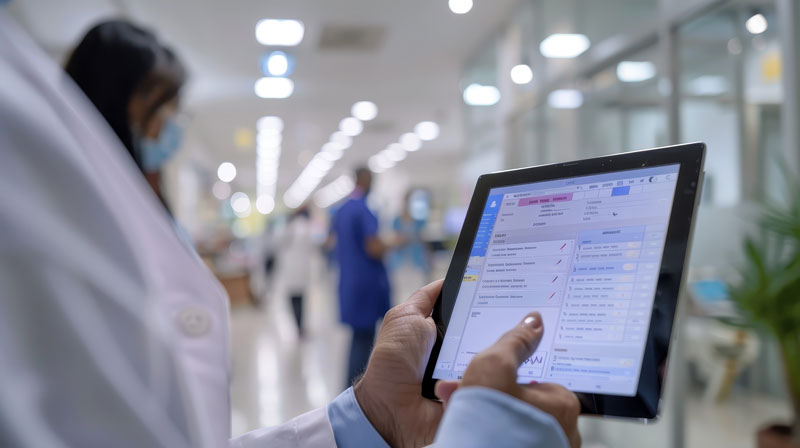

Predict which sites will miss enrollment targets six weeks before the shortfall becomes a timeline event.
Phase II and III Enrollment Optimization
Predict which sites will miss enrollment targets six weeks before the shortfall becomes a timeline event.
The Enrollment Prediction Agent monitors enrollment velocity, screen failure rates, and patient flow at every active site, predicting completion dates with sufficient lead time to activate contingency sites or intensify recruitment support before the primary timeline is compromised.
VP Clinical Operations and Enrollment Managers
Direct your monitoring resources to the sites and data domains that actually carry risk — not the ones on a predetermined visit schedule.
Risk-Based Monitoring Programs
Direct your monitoring resources to the sites and data domains that actually carry risk.
TrialOpsIQ's risk-based monitoring intelligence continuously updates the risk profile of each site from live performance data. Your clinical monitoring resources are directed to the sites and data domains carrying the highest current risk, replacing inefficient scheduled visits with intelligence-driven oversight that satisfies FDA and EMA risk-based monitoring guidance.
Head of Site Management and Clinical Monitoring
Continuous data quality monitoring that prepares your trial for regulatory inspection at every stage, not just at database lock.
Data Integrity and Inspection Readiness
Continuous data quality monitoring that prepares your trial for regulatory inspection at every stage, not just at database lock.
The Data Quality Agent monitors data entry, missing assessments, and procedural deviations continuously across all sites and data domains, surfacing issues at the point where correction is feasible rather than at database lock, where the cost and regulatory risk are highest.
Data Managers and Regulatory Affairs Teams
Objective, continuous performance data that makes CRO accountability conversations based on evidence rather than perception.
CRO Performance Management
Objective, continuous performance data that makes CRO accountability conversations based on evidence.
TrialOpsIQ provides sponsors with objective, real-time performance data on CRO-managed sites, covering enrollment velocity, data quality, protocol adherence, and monitoring visit effectiveness. CRO performance conversations are grounded in evidence. Escalations are supported by a complete audit trail.
Trial Sponsors and Clinical Operations Directors

Connects to the enterprise systems that you already run.

Medidata Rave
EDC Platform
Veeva Vault
CTMS and eTMF
Oracle CTMS
Trial Management
Medidata CTMS
Site Management
Oracle Clinical
Data Management
21 CFR Part 11
Validated Environment


Three ways TrialOpsIQ delivers for your clinical program.

TrialOpsIQ is configured for your trial type, EDC system, CTMS environment, and regulatory framework. The agents are validated for use in GxP environments and operate within your existing validated data infrastructure.

01
Clinical Technology Teams and Biostatistics
Build your own clinical operations intelligence platform on CAMS.
Your team has the clinical operations and regulatory domain expertise. CAMS provides the agent infrastructure. Build trial intelligence specific to your therapeutic areas, trial types, and operational processes, within a validated, GxP-compliant architecture.
  • Agent Studio for custom clinical operations workflow automation
  • Validated EDC, CTMS, and ePRO system connectors
  • AgentEval for IQ/OQ/PQ validation of AI before operational deployment
  • Full audit trail compliant with 21 CFR Part 11 and EU Annex 11
  • Agent Control Tower for continuous oversight of clinical AI agents
02
VP Clinical Operations and Trial Sponsors
Deploy TrialOpsIQ, configured for your active trial portfolio and operational priorities.
TrialOpsIQ is production-ready for clinical environments. We configure it for your EDC and CTMS systems, validate the deployment against your GxP requirements, and calibrate the performance monitoring to your trial design and operational thresholds.
  • EDC and CTMS integration within your validated environment
  • Performance threshold configuration based on your trial design and protocol
  • Risk-based monitoring configuration aligned to FDA and EMA RBM guidance
  • Enrollment prediction model calibration against your historical trial data
  • Regulatory inspection readiness documentation and audit trail configuration
03
Pharmaceutical and Biotech Leaders with Specific Trial Challenges
Bring us your clinical operations challenge. We build the intelligence on CAMS.
A custom adaptive trial monitoring system, an enrollment optimization platform for rare disease, a cross-program trial portfolio intelligence product. You bring the clinical domain knowledge. We build the agentic AI solution, validated and inspection-ready from day one.
  • Clinical operations architecture design with your clinical development leadership
  • Rapid validated build using CAMS as the GxP-compliant development foundation
  • Regulatory submission support for novel AI monitoring approaches
  • Integration with your existing validated clinical data infrastructure
  • Deployment, validation, and ongoing performance monitoring post-launch

Questions that clinical operations leaders ask us

If your question is not here, our team will answer it directly.

Talk to a Specialist →
Is TrialOpsIQ validated for use in GxP environments?
Yes. TrialOpsIQ is designed for deployment within validated GxP environments and operates in compliance with 21 CFR Part 11 and EU Annex 11 requirements. The CAMS platform provides the validation framework, audit trail, and change control infrastructure required for clinical use. We support IQ/OQ/PQ validation activities as part of the implementation engagement.
Which EDC systems does TrialOpsIQ integrate with?
TrialOpsIQ includes validated connectors for Medidata Rave, Oracle InForm, Veeva Vault EDC, and other major EDC platforms. CTMS integrations are supported for Medidata CTMS, Oracle CTMS, Veeva Vault CTMS, and other standard systems. All integrations operate as read-only connections within your validated data environment. No study data is processed outside your validated infrastructure.
How does the enrollment prediction model handle rare disease trials with small patient populations?
The enrollment prediction models are specifically configurable for low-prevalence patient populations. The system incorporates disease prevalence data, site catchment demographics, and historical enrollment rates from comparable rare disease studies to generate realistic predictions with appropriate uncertainty ranges. For orphan indications, the models are calibrated during the initial configuration period using your historical feasibility and enrollment data.
Does TrialOpsIQ's risk-based monitoring approach satisfy FDA's 2013 RBM Guidance and EMA's Reflection Paper?
Yes. TrialOpsIQ's risk-based monitoring intelligence is specifically designed to satisfy FDA's Guidance on Risk-Based Monitoring and EMA's reflection paper on risk-based quality management. The platform provides the continuous data review, centralized statistical monitoring, and risk signal documentation required to demonstrate compliance with RBM guidance during regulatory inspection. Many sponsors use TrialOpsIQ's monitoring documentation as primary evidence in their clinical monitoring plan submissions.
Can TrialOpsIQ provide real-time trial performance visibility to both the sponsor and the CRO simultaneously?
Yes, TrialOpsIQ supports configurable access levels for sponsor teams and CRO partners simultaneously, with role-based access controls that determine which performance data is visible to each party. Sponsor teams have visibility across the full trial portfolio. CRO partners see performance data for their managed sites. The access control configuration is agreed during the engagement setup and can be updated as the relationship evolves.


TrialOpsIQ · Built on CAMS by Covasant

Your next trial delay is already visible
in your operational data.

See how TrialOpsIQ surfaces enrollment shortfalls, site performance issues, and protocol deviation risks while your team still has time to act, not after the timeline has already slipped.