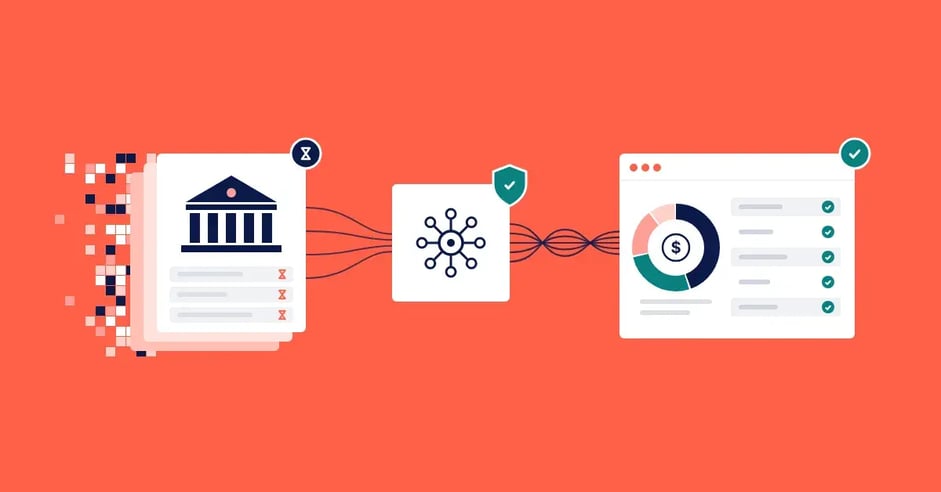
Every bank and wealth firm runs on back-office queues, where analysts verify documents for new clients and teams match records for completed trades and transactions. Each handoff in those queues adds to the waiting time, and this waiting time adds up days of delay to the client’s outcome.
Leaders are very much aware about these costs.
Here’s an industry perspective. The 2026 Global AI in Financial Services Report from the Cambridge Centre for Alternative Finance has found that 52 percent of industry respondents already adopt agentic AI. A KPMG survey further adds that 51 percent of banks launch AI agents in pilot stage.
Most of these efforts stall before they would even reach production.
Leaders have spent years digitizing the front end. However, the back office still moves at a glacial pace and depends largely on the speed of human handoffs. Agentic AI changes that pace. Agents read documents and query systems. They then apply policy and complete the work.
But speed alone does not win this shift. Regulators demand proof as well, and boards demand control.
Verifiable AI gives leaders both. It decides which firms scale and which firms stall.
What is Verifiable AI?
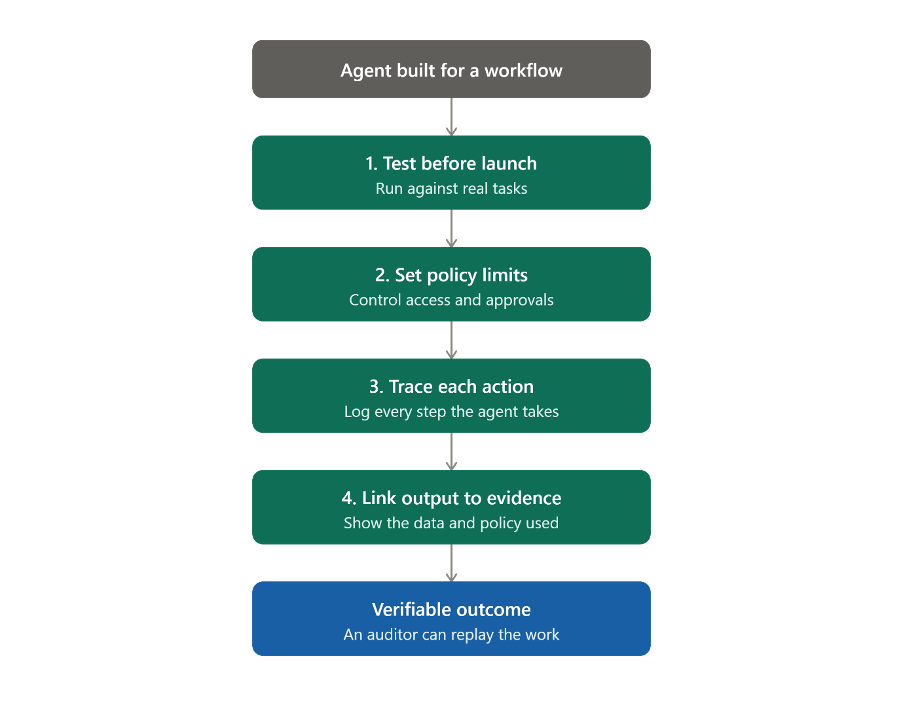
Verifiable AI lets a firm prove what its agents did, why they acted and who allowed them to act. Every decision leaves a record that an auditor can follow from the first input to the outcome.
Consider a loan onboarding case. An agent approves a client file. A verifiable system shows the documents the agent read and the policy it applied. It also shows the person or rule that granted the agent its authority. A regulator can replay the case step by step and reach the same conclusion.
These four practices make this possible.
Banks and wealth firms need this proof because regulators and boards could demand it. Verifiable AI transforms an agent into an accountable and dependable colleague.
What does an autonomous back office look like?
Consider a Monday morning in a bank operations team. Over the weekend, hundreds of client documents and transaction records get pile up, which the agents read through and match up with every record before the first analyst logs in.
Then they flag few cases that need human decision, such as an unusual transaction or a missing signature. This helps the team to start the day with a short, prioritized queue of activities and spend its time on judgment calls instead of mere data entry.
The agents are trained to complete the routine work within the limits that the policy has set. Each agent receives a goal and plans the steps to reach it. It then works inside the firm’s system to complete those steps. In this process, every action leaves an auditable trail, which makes the AI verifiable.
Leaders measure the impact of this through the cycle time, which is the number of hours between the start and end. Every hour that agents save helps to speed up the client outcome and lowers the cost per case as well.
Why does the back office deliver the fastest return?
The back office handles a large volume of document heavy work that follows clear rules. Agents perform well in such environments.
A joint BCG and OpenAI report conclude that the back office delivers the most immediate and substantial AI impact in retail banking. The same research projects that banks scaling agents could cut costs by 30 to 40 percent. It also projects a profitability lift of up to 30 percent by 2030.
The cycle time evidence is just as direct. A large Dutch financial institution cut onboarding time by 90 percent after it applied AI to KYC and compliance. EY found that agentic AI halved AML investigation time, which saves roughly two hours of human labor per case. Infosys BPM cites an average corporate KYC cycle of 95 days. Agents can compress that cycle to near instant processing for standard risk profiles.
Where do cycle times collapse first?
These four workflows offer gains at speed.
- KYC and onboarding: KYC checks who is your new client. Agents collect the documents and verify the identity at the same time. Analysts review only the doubtful cases.
- Suitability and portfolio operations: Suitability checks whether an investment fits your client. Agents gather the client data and compare it with the mandate rules. Your advisors spend their time with clients and not the background work.
- Reconciliation and exception handling: Reconciliation checks whether your records match across systems. Agents compare the records and trace each mismatch to its source. They also fix the routine mismatches. They send the complex ones to your team with full background information.
- Regulatory reporting: Regulatory reporting shows regulators what your firm has done. Agents pull the evidence and fill in the report templates. Your compliance team only has to review the finished draft.
What makes AI verifiable?
With autonomy the stakes rise behind every decision.
Verifiable AI helps organizations to prove what an agent did, why it acted and who allowed it. These four properties make that proof possible.
- Traceability: The system logs each step an agent takes. This helps the auditor to replay the work and understand the trail.
- Evidence: Every output points to the data and the policy that was fed in.
- Testing: Teams test agents against real back-office tasks before the launch.
- Boundaries: Policy limits and keeps in check what each agent may access and approve.
An auditor can follow this trail from the first input to the final decision. That trail turns an experiment into a production system.
How should leaders build an autonomous back office?
The process can begin with embedding discipline and then technology can follow. These six steps work well.
How does Covasant SERAA deliver verifiable autonomy?
Covasant SERAA sits between the systems a firm already runs and the AI agents that act on them. The name follows the five jobs that intelligent action requires.
Covasant SERAA gives a firm one connected intelligence layer for its AI agents.
Covasant leads this shift because it builds governance into the architecture instead of adding it later. Every SERAA product sense, reasons, remembers or acts under the same policy and the same audit trail. The firms that lead the next decade will run back offices that act on their own and explain themselves on demand.
Ready to shorten your cycle times?.
Pick one back-office workflow that moves too slowly and bring it to Covasant. The team will show you which SERAA product fits. They will also show you how to prove results within weeks.
Visit the Covasant website